Biography
The Films
Biography
Artist and musician Tatsu Aoki was born into Tokyo’s Toyoakimoto artisan family, a hereditary lineage stretching back to the Edo era tasked with training geisha in the various performing arts associated with their occupation. Aoki’s engagement with traditional Japanese artistic forms stretches back to when he was only four years old and began performing with his family, subsequently studying traditional Japanese instruments such as shamisen and taiko. Buttressing this musical education was Aoki’s early exposure to the world of filmmaking through his father Wahei Hoshino, a producer for major Japanese genre film studio Shintoho. “I received a regular 8 movie camera as a gift,” recalled Aoki, “and ran around filming and pretending to be a movie director.”
Aoki’s tastes soon took a decisive turn, drawing his interest towards Japan’s burgeoning experimental music scene and the avant-garde jazz making waves at the time in America. “The sound of shamisen, flute, and taiko were with me all of my life,” Aoki observed. “When I was a teenager, I did not want to do traditional music anymore. I basically rebelled and wanted to do something new and at the time the Tokyo Underground Arts movement was taking off.” It was during this period that Aoki joined the Gintenkai Troupe, an arts collective which combined rigorously traditional taiko performance with influences from American and European artist cinema and performance art. Simultaneously, Aoki began experimenting with small gauge cinema, beginning his career-long exploration of the analogs between filmmaking and musical performance.
Aoki spent much of the late ’70s in the United States and in 1979, he permanently settled in Chicago, drawn by the city’s vanguard jazz scene which in time he would become a major contributor to himself. Soon after, he enrolled in the School of the Art Institute of Chicago (SAIC) to study filmmaking under the tutelage of Ernie Gehr and Sharon Couzin. After receiving his MFA, Aoki began teaching at the school, covering an array of topics related to small-gauge filmmaking and representations of Asian identity in cinema. In recent years, Aoki has established himself as the institution’s primary analog cinema braintrust, leading a number of classes related to materialist approaches to experimental filmmaking. In recent years, a number of Aoki’s former students such as David Gatten and Jodie Mack have achieved significant renown as artists in their own right.
Concurrent with the start of his education at SAIC, Aoki began an explosive run of small-gauge filmmaking which lasted more than 25 years and resulted in dozens of short films. Across his filmography, Aoki has utilized a litany of techniques to disrupt the conventions of traditionally captured and reproduced photochemical moving images, his work marked by an acutely focused attention to the material textures of 16mm and super 8 film. Early films such as 3725 and Dreamworks thread a dizzying variety of in-camera tricks, unexpected sound incursions, and optically printed spews of color as gags throughout otherwise quotidian scenarios. The paired down approaches of Rapturous and Harmony move even further into abstraction, shattering familiar images of parking garages and downtown bustle into dazzling new forms of geometry. Aoki has described his approaches to these works as akin to his music, built on instinct and exploration rather than carefully composed and executed.
Aoki’s prolific filmmaking career has long been celebrated in Chicago, with retrospective showcases at Chicago Filmmakers and the Gene Siskel Film Center, but his work remains obscure elsewhere. That obscurity has been, in part, about how Aoki has chosen to position his work. Describing his music career in terms that are equally applicable to his filmmaking, Aoki said, “I knew from early on that I needed to do this, to sort of cultivate my own field in Chicago so I can grow my own crops.” Consequently Aoki has not distributed his films through traditional avant-garde channels such as Canyon Cinema or the Film-Maker’s Coop, but instead focused on keeping his filmmaking situated within the context of the Asian American diaspora.
In 1984, Aoki founded Innocent Eyes and Lenses (IEL), a nonprofit dedicated to supporting and releasing music by Asian American artists and musicians. IEL would facilitate distribution for Aoki’s own work, and prove instrumental in bringing the work of some of Japan’s most important experimental filmmakers to American audiences. In collaboration with the Japanese experimental cinema organization Image Forum, IEL would present the first touring “Japanese Experimental Film Show” in 1986. Aoki curated a number of subsequent iterations of the touring program, providing many American cinephiles with their first exposure to work by several major figures in Japanese avant-garde film such as Takashi Ito and Toshio Matsumoto. The Bay Area has been a particularly important site of exchange for Aoki, who often presented IEL and JEFS programs at SF Cinematheque and the De Young in the 1980s and ’90s. Aoki would later change the name of IEL to Asian Improv aRts MidWest (AIRMW) to reflect the organization’s growing focus on improvised music and close alignment with the San Francisco-based Asian Improv aRts. Aoki remains the Executive Director of AIRMW and continues to advocate for Asian artists and musicians, resulting in a Commendation for Promotion of Japanese Culture by the Foreign Ministry of Japan in 2017.
“In his best films Tatsu Aoki uses cinematic materials not to represent objects or even to unmask illusions, but to place the viewer in an almost meditative state,” observed critic Fred Camper in the Chicago Reader on the occasion of a four-program Film Center retrospective. “By the way he calls attention to the mechanics of filmmaking, he also suggests that all images are ultimately illusory.” The highly material and self-reflexive nature of Aoki’s films make them inextricably celluloid works of art, and they remain most legible in their original 16mm format.
Aoki has made over fifty films in a range of media, including 16mm, Super 8 and DV. Chicago Film Society is working with Aoki to identify preservation priorities and create new negatives and prints from his vast filmography.
Preserved Films
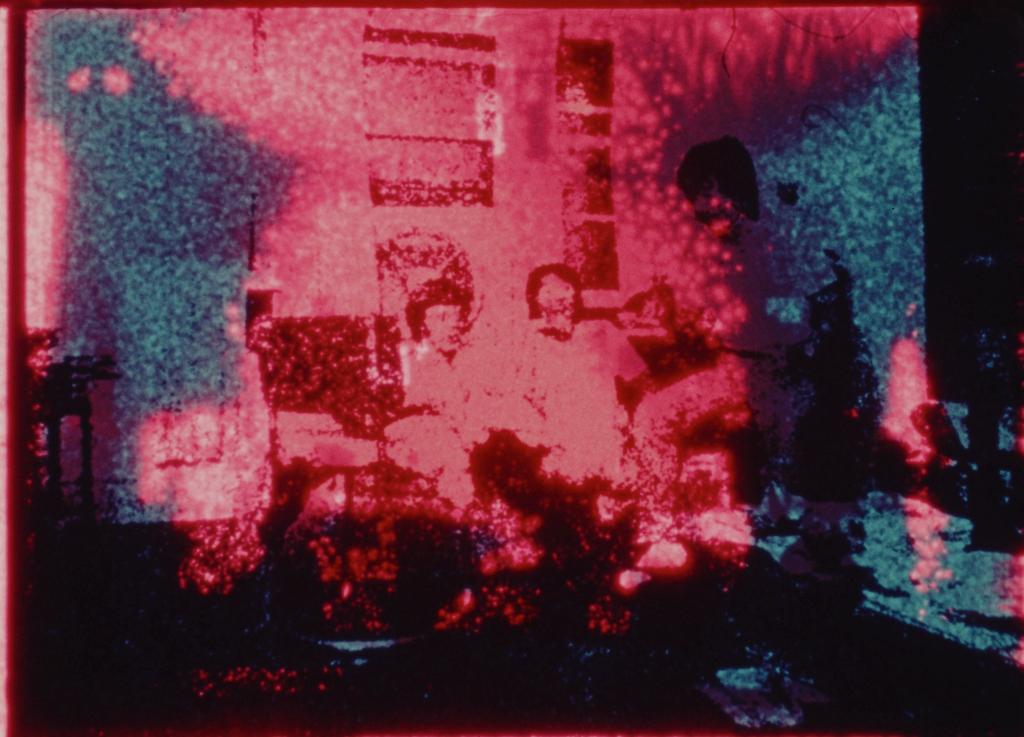
3725 (1981) – One of Tatsu Aoki’s earliest 16mm films, 3725 is named for a Chicago apartment building where Aoki lived in the late 1970s: 3725 N. Sheffield Ave. (The original apartment was torn down and replaced by a condo building in the late 1990s.) Aoki’s film documents this domestic space in vibrant, loving detail, with regular goofy interjections from roommates hanging out, blowing bubbles, and playing with toys. 3725 includes several of Aoki’s early experiments with low-budget stop-motion effects and optically-manipulated footage.
3725 has been preserved by Chicago Film Society through the National Film Preservation Foundation’s Avant-Garde Masters program and the Film Foundation. Funding provided by the Hobson/Lucas Family Foundation. Laboratory services: Colorlab, Simon Daniel Sound
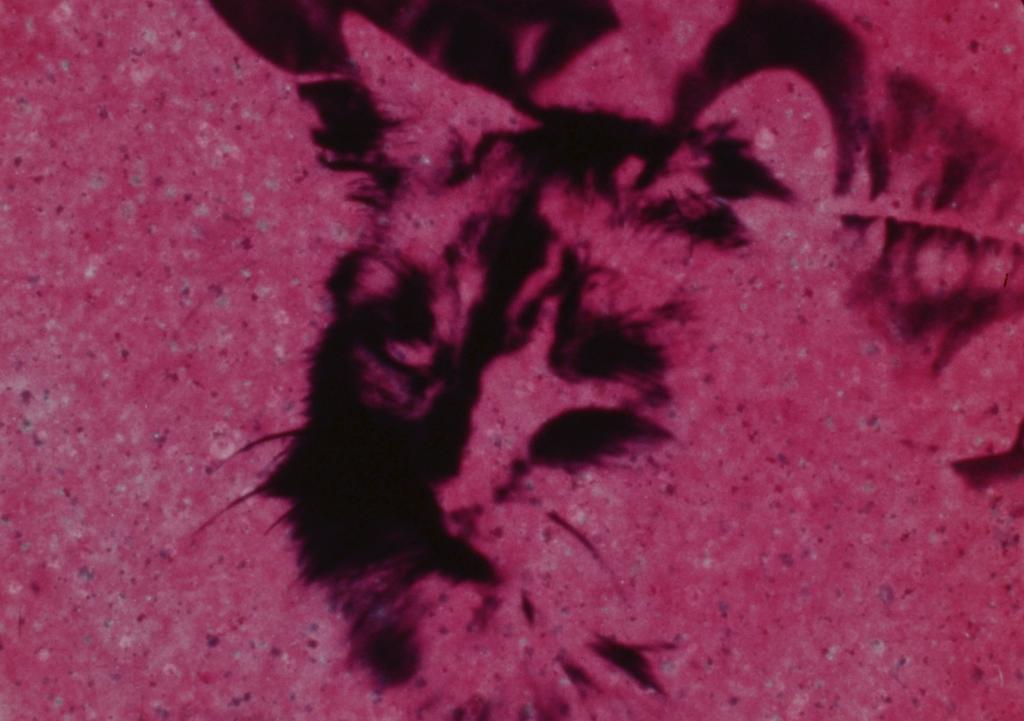
Dreamworks (1983) – This ribald parody of pompous Freudian psychoanalytic theory and stodgy structural filmmaking skewers academic conventions to answer that most urgent question: what is my cat thinking? Dream Works mixes ‘objective’ segments overlaid with absurdist narration (“So you have one symbol in the dream, perhaps an empty saucer, symbolizing the cat’s anger towards her mother for not providing enough milk for her”) with other scenes from that cat’s subjective perspective. As if in unconscious rebellion against the strictures of the cat psychiatrist, the film soon breaks down, with pixellated footage, posterized images, inverted colors, and hand-scratched outlines. Though infrequently revived and dismissed by Aoki as “one of the stupid ones,” Dreamworks was screened at the 2023 edition of Chicago Film Society’s Celluloid Now showcase to great acclaim.
Dreamworks has been preserved by Chicago Film Society through the National Film Preservation Foundation’s Avant-Garde Masters program and the Film Foundation. Funding provided by the Hobson/Lucas Family Foundation. Laboratory services: Colorlab, Simon Daniel Sound
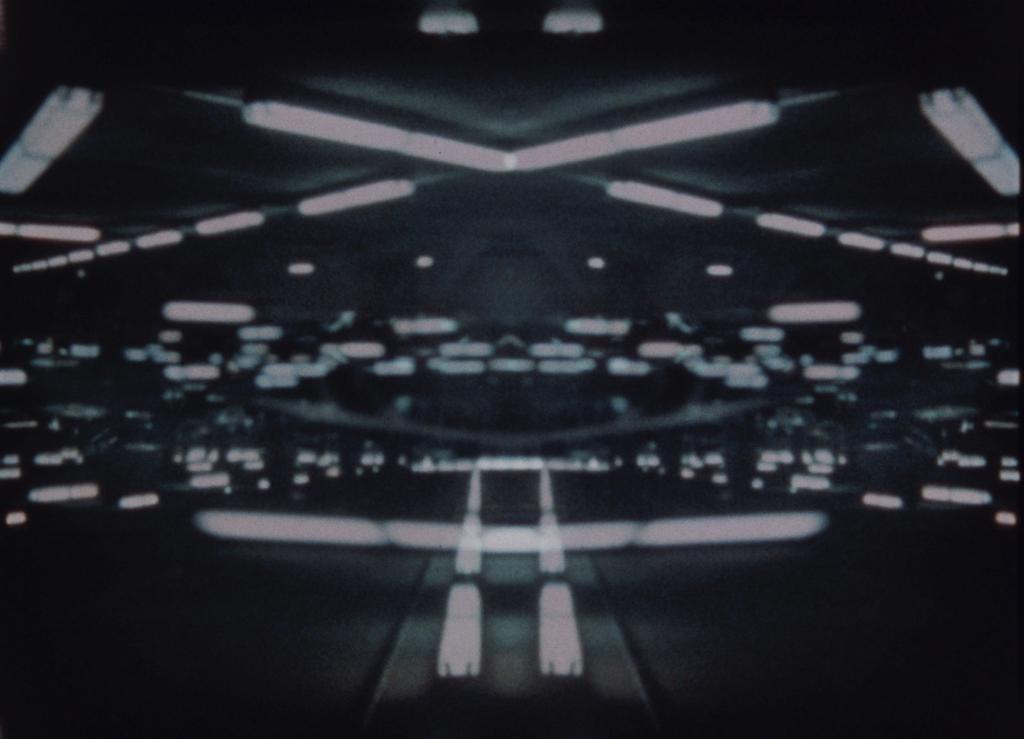
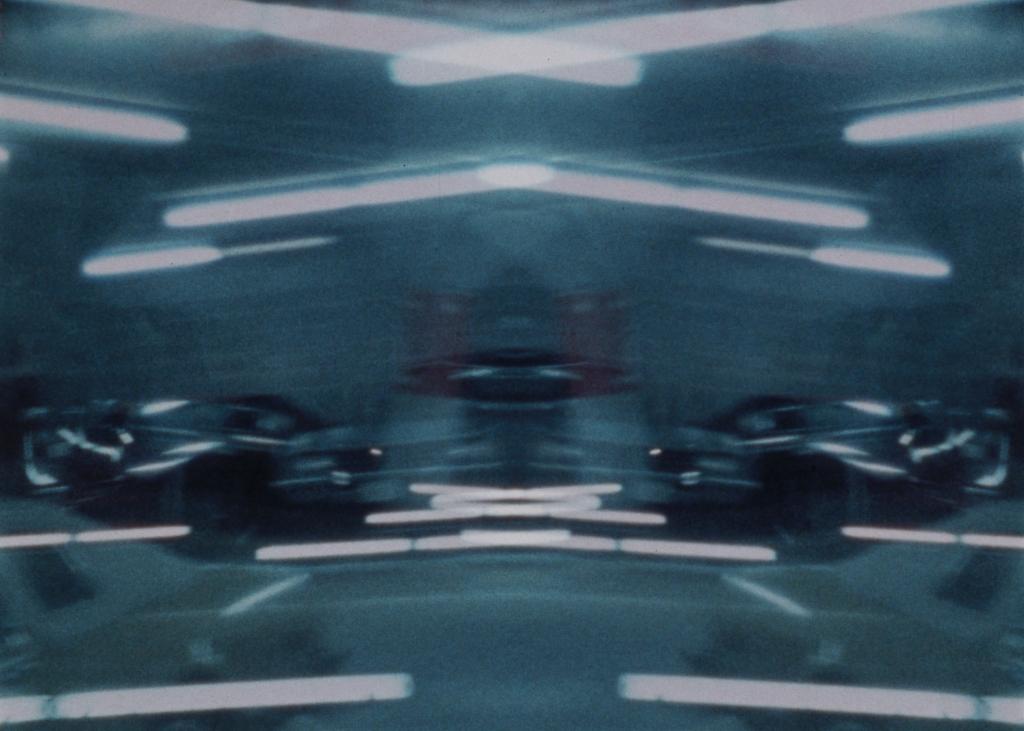
Rapturous (1984) – The most nondescript architectural structure imaginable – a parking garage in the Chicago Loop – becomes a riot of light and shape through multiple layers of superimposition, with cars, lane lines, and light fixtures converging upon one another. Upon viewing the hitherto untitled film, Aoki’s teacher Ernie Gehr suggested that he call it ‘Rapturous.’ During a retrospective of Aoki’s work at the Film Center of the Art Institute of Chicago, Fred Camper singled out Rapturous as ‘a mildly hypnotic kaleidoscope’ in the Chicago Reader.
Rapturous has been preserved by Chicago Film Society through the National Film Preservation Foundation’s Avant-Garde Masters program and the Film Foundation. Funding provided by the Hobson/Lucas Family Foundation. Laboratory services: Colorlab.
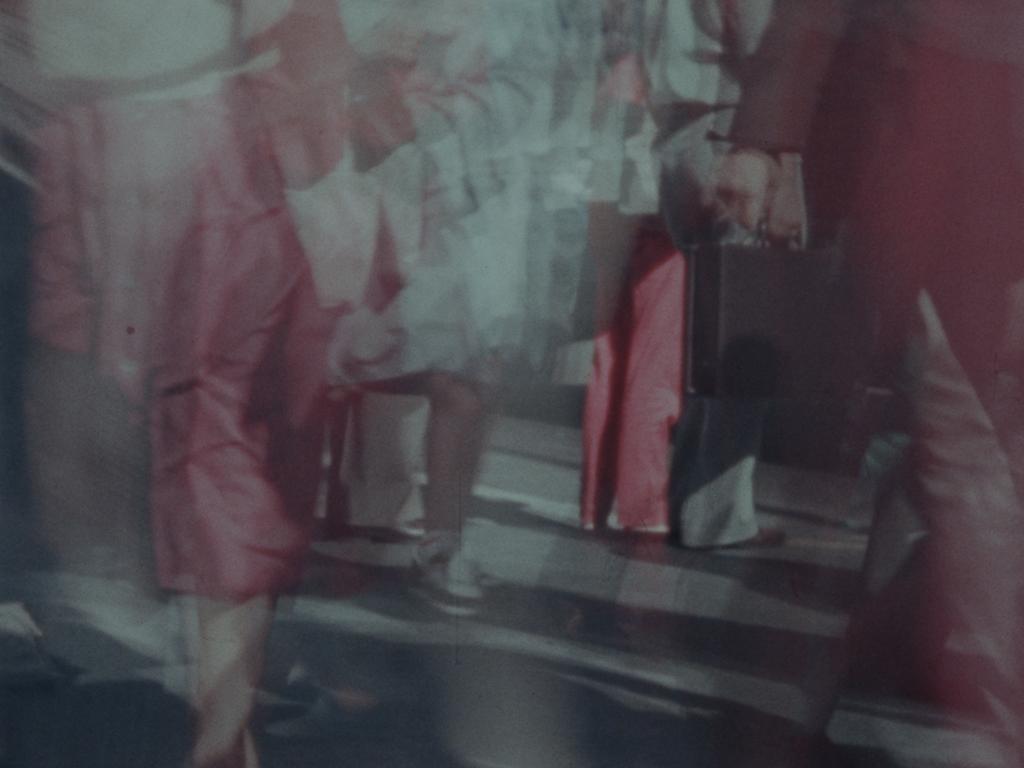
Harmony (1990) – Chicago is, famously, a city of neighborhoods, and the city’s independent filmmakers have obliged, often focusing on semi-anthropological portraits of ethnic enclaves and the strange folkways of local watering holes, social clubs, and the like (c.f. Stuart Hagmann and Maria Moriates’s Kali nitha, Socrates or Tom Palazzolo’s Jerry’s Deli). Aoki’s Harmony depicts the Loop, the steel-and-skyscraper central business district where comparatively few people live, but thousands traverse daily. Like Gehr’s Untitled (Part One) 1981, Harmony suggests the bustle of an urban locale through anonymized street photography, but Aoki further abstracts the passers-by with stuttering superimpositions and constant optical effects. The only exception: a brief shot of a fountain that becomes a literal oasis amidst the street cacophony.
Harmony has been preserved by Chicago Film Society through the National Film Preservation Foundation’s Avant-Garde Masters program and the Film Foundation. Funding provided by the Hobson/Lucas Family Foundation. Laboratory services: Colorlab, Simon Daniel Sound